
• Paul Hekkert
  • CLICKNL CONTINUES THE MOVEMENT

    CLICKNL would like to thank Paul Hekkert, Barbera Wolfensberger, and Jann C de Waal for their tremendous efforts. Although the Top Team is disbanding, CLICKNL will continue its work as a TKI (Top Consortium for Knowledge and Innovation).

    In this article: an interview with Paul Hekkert

Paul Hekkert: from Captain of Science to academic nomad

Captain of Science Paul Hekkert, responsible for the Knowledge & Innovation portfolio, is leaving the Top Team, of which he has been a member since 2015. “We have achieved important milestones, such as strengthening the sector by giving it a prominent role in tackling major social issues, with agendas that guide the dozens of programs we have developed and equipping creative professionals with a toolbox full of tools, methods, and knowledge to effectively use creativity for impact and change.”

We are no longer Calimero, but a mature and serious player.

To start on a positive note: “With a wonderful, diverse, friendly, and complementary team of experts, we have achieved more than we dared to hope for at the time,” says Hekkert. According to him, the fact that the top team is ceasing to exist is not dramatic. "In the past, the Ministry of Economic Affairs partially outsourced management to the top teams of various Top Consortia for Knowledge and Innovation (TKIs) and now wants to take it back under its own management. We are no longer Calimero, but a mature and serious player. CLICKNL is an important hub in the playing field. The sector now has strong organizational capabilities and an important voice, and works closely with the Ministry of Education, Culture and Science and the Ministry of Economic Affairs. You can no longer ignore this important connector. In this way, the top team has made itself redundant," he believes.
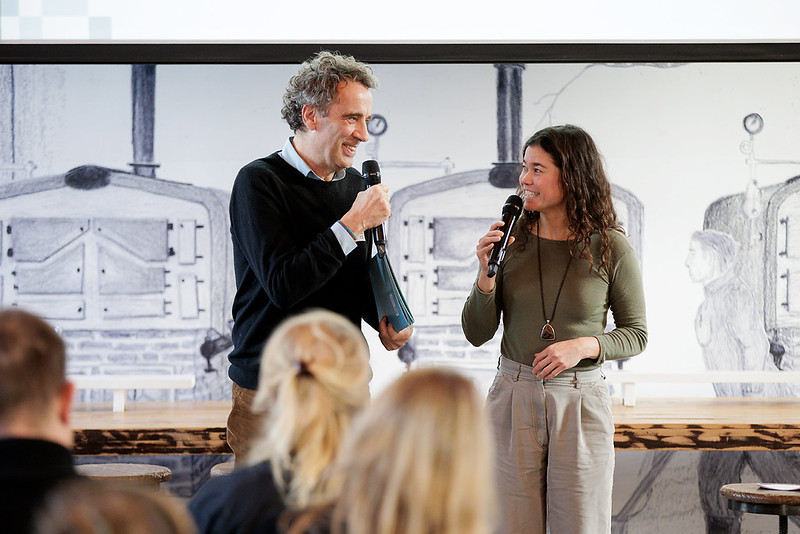
Paul Hekkert tijdens de KEM-conferentie 2025
Paul Hekkert on stage during the KEM conference 2025 - photo Aad Hoogendoorn

The legacy of fifteen years of the Creative Industries Top Sector is in good hands with the largest party in the Netherlands

According to Hekkert, the legacy of fifteen years of the Creative Industries Top Sector is in good hands with the largest party in the Netherlands: the creative sector is actively and continuously involved in social challenges. From the outset, stimulating public-private partnerships (PPPs) was one of the objectives of the Top Sector policy: to build small ecosystems in which governments, knowledge institutions, and industry come together and collaborate. Through various CLICKNL programs, creative professionals make a structural contribution to the complex social challenges of our time; they bring new perspectives and break through deadlocked processes. Hekkert expects that CLICKNL and other established organizations, such as the Federation of Creative Industries, Dutch Design Foundation, and the Stimulation Fund, will collaborate even more intensively on developing a strong creative industry, enabling us to make the Netherlands more beautiful and better.

Proud of CRISP

Paul Hekkert was professor of Form Theory at the Faculty of Industrial Design Engineering at Delft University of Technology until 2024. He conducted research into the theory of aesthetics, form and meaning, and in particular into how people experience products and the effect this has on our behavior and well-being.

  • CRISP Magazine 2013
    CRISP Magazine 2013
  • When he was asked to join the top team ten years ago, he was not only intensively engaged in his own research, but also active at the national level as chairman of the board of the Creative Industry Scientific Program (CRISP), which connected the sector with science, industry, and government. “I am very proud of that, because it was the first time that the worlds of scientists and creatives – at that time mainly designers – met and made clear what they needed from each other. That was a great prelude to the top sector policy.”

He was already familiar with the top sector approach and felt connected to it. “Delft University of Technology provided about four of the nine Captains of Science, so we had a big say in the top sector approach,” he says, "and I was now able to think more broadly about the significance of the field for Dutch society. The goal I set for myself was to strengthen the knowledge base of the creative industry by involving the sector in research questions and raising awareness of how scientists from various disciplines—from design and technical scientists to administrative and humanities scholars—can contribute to that knowledge base. The research domain was later expanded to include knowledge-oriented research within higher professional education and secondary vocational education."

Change professional with toolkit

Since his start as Captain of Science in 2015, he has seen many changes. The landscape looked very different back then. The creative industry was a sectorally organized patchwork consisting of seven sectors that were divided almost like trade associations, such as architecture, fashion, digital design, and heritage. “They represented their own interests and those of their constituents from their own domains,” he says. “That fragmentation was a problem: the sub-sectors did not form a homogeneous whole, and all those different blood groups hardly talked to each other. Just having a Creative Industry umbrella above them is not enough.”

Fragmentation was a problem: the sub-sectors did not form a homogeneous whole

That is why, in 2016, in close collaboration with CLICKNL and its new director Bart Ahsmann, it was decided to no longer operate on a sectoral basis. A good move, according to Hekkert. "We don't focus on the differences, but on what connects us, and we have strongly focused on creative competencies and the creative professional who uses creativity as an important tool to bring about impact and change. Whether it's an architect or a heritage specialist, the ‘change professional’ who is open to knowledge development and application needs a toolbox: a suitcase full of tools, methods, and knowledge. We have started to serve them. We have laid down what connects them in cross-sector agendas."

Showpiece

The agendas are worth their weight in gold: we can take the lead in areas where you want to develop new knowledge and innovations that will benefit the Netherlands economically and socially.

With the KEM agenda and other cross-sector agendas, we were able to implement research and innovation policy for the creative industry in a very targeted manner. For example, in 2019, we developed the ‘Transitions and Behavior’ program with NWO, in which all top sectors participated and contributed financially. “I have always seen that as one of our showpieces,” says Hekkert. One of the important components in transitions is behavioral change. Think of switching from gas, flying less or eating less meat, and using more car-sharing or plant-based consumption. With ten million euros for PPP projects addressing behavioral issues within one of the thematic missions, this was a major program. Hekkert himself was closely involved in a program around the protein transition: “With various scientists from Delft, Wageningen, and Utrecht, the creative sector, companies such as Unilever and Danone, and a number of NGOs involved in the food transition, we set up a truly interdisciplinary ecosystem and developed a great deal of knowledge about influencing behavior for the benefit of this transition."

A new wind

In both the Netherlands and Europe, the focus of government policy has shifted from mission-driven innovation policy to the importance of strengthening competitiveness, economic prosperity, and strategic autonomy in order to become less dependent on the US and China. "The question now is what we can contribute to competitiveness and innovation. For us, that is self-evident, because we have always seen creativity as the engine of innovation. Once again, we must make it clear that it is not just about technology. Without creative potential, competencies, and methods, you cannot make technology manageable and valuable, because creativity gives it form and direction. Unfortunately, we must continue to proclaim that message," says Hekkert.

We need to make it clear that it's not just about technology

Another point of attention: the creative industry remains a diverse and fragmented sector with many small players. “We don't have an ASML or Unilever of the creative industry. That's why it's important that organizations such as CLICKNL and the Dutch Design Foundation exist, where all the different interests and colors come together and which keep the ecosystem intact with the help of stable policy and financial support.”

Academic nomad

Hekkert's departure from the top team and TU Delft does not mean that he is sitting still. “As a professor, I was in a golden cage. Now I have a more uncertain but also more dynamic existence. I enjoy spreading my wings and living life as an academic nomad,” he says.
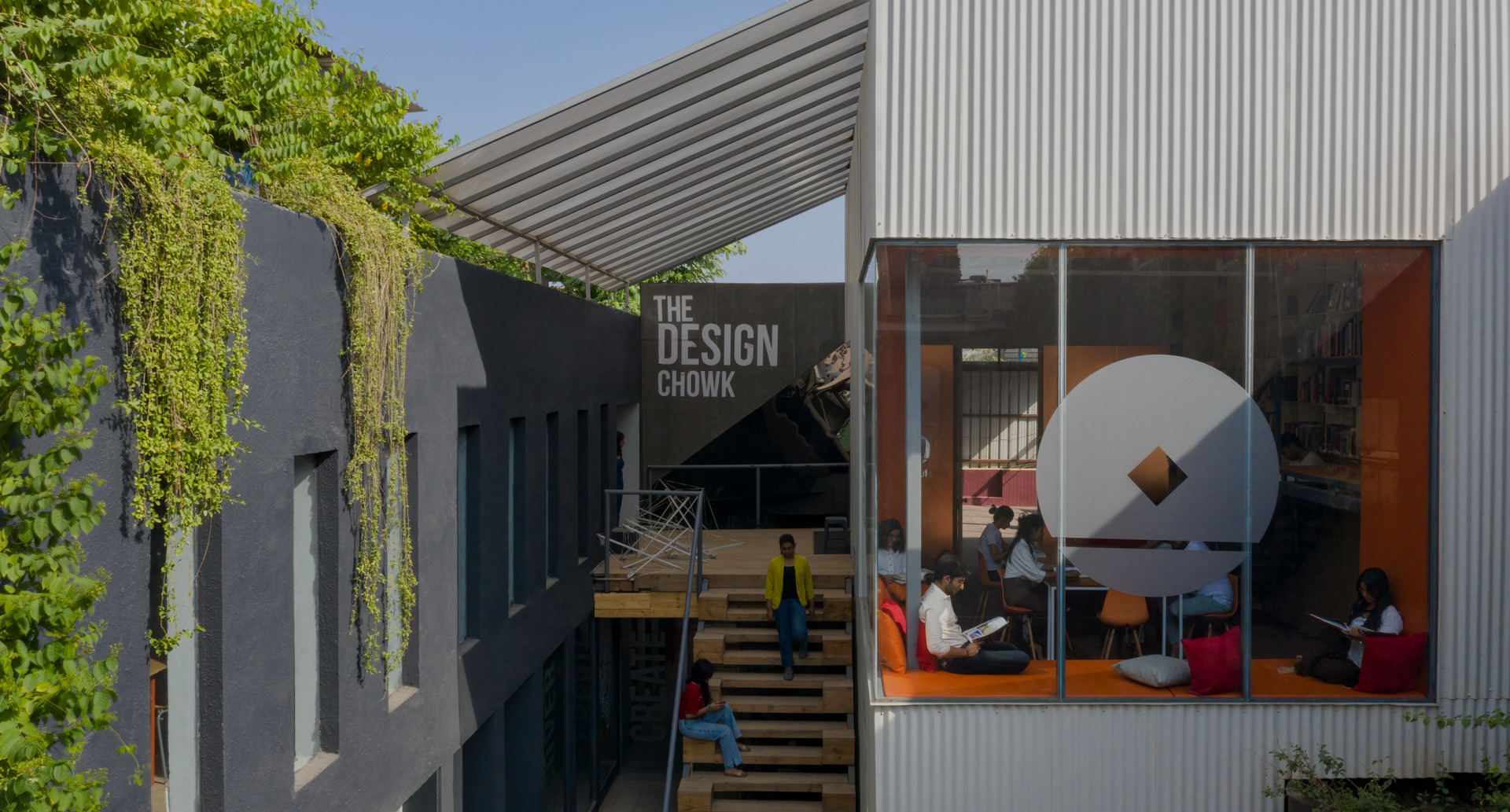
He is closely involved with the design program “The Design Village” in India, which he founded ten years ago together with international academics and subject specialists. The program trains designers who want to focus primarily on social impact. “It's going so well and we find it so special that we decided to bring the training institute to Europe, to Italy. This makes it the first Indian design institute with a campus in Europe,” says Hekkert, who lived in Italy this year as a visiting professor at the Politecnico. “I am helping with the setup and development of the master's program and am working on a book about the institute,” he says.

The Design Village India
The Design Village India - photo www.thedesignvillage.org

He is also involved in ekip, a major European program that anchors the role of the creative industry in innovation ecosystems by developing policy recommendations at the municipal, national, and European levels. “We have built up so much knowledge and experience, which has greatly strengthened the Netherlands, that I am convinced we can also use this to make Europe stronger and more beautiful. This is something that is close to my heart; I would like to remain involved in this with CLICKNL."

Finally

Finally, he hopes that future generations of scientists and creative professionals will remain a natural and indispensable part of the ecosystems in which major change processes are shaped. “That they don't have to fight for their place every time or only be able to run an occasional pilot and then say goodbye, but can take a longer-term perspective and build long-term relationships with governments and knowledge institutions. That gives all players peace of mind, reflection, continuity, and expertise.”

Text: Viveka van de Vliet
Images: Kas van Vliet, Aad Hoogendoorn, CRISP, Transitions and Behavior research program, The Design Village